


Hey everyone! It’s been way too long. I’m not going to write a thing about how I’m going to be posting more, blah blah blah. I have a lot going on and I will be posting an update about THAT stuff soon. But for now I wanted to link you all to my two upcoming courses for Cinejourneys that I’m really excited about teaching: Weimar Cinema: Images Before Fascism (starting November 11th) and The Birth of Cinephilia: France in the 1960s (Starting January 6th). Courses run for four weeks on Tuesday evenings on Zoom, and the cost is just $100 for each. More info at the links below.
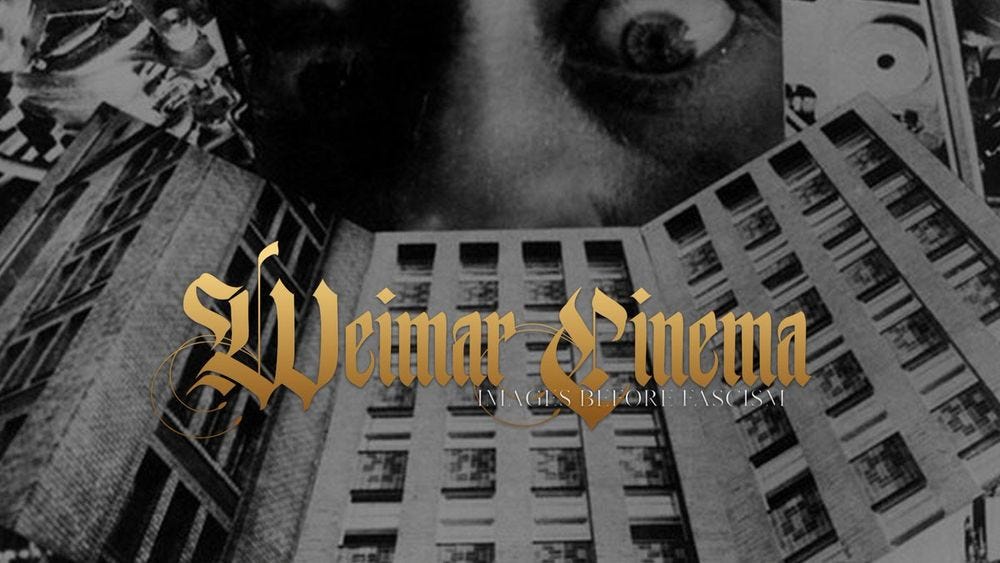
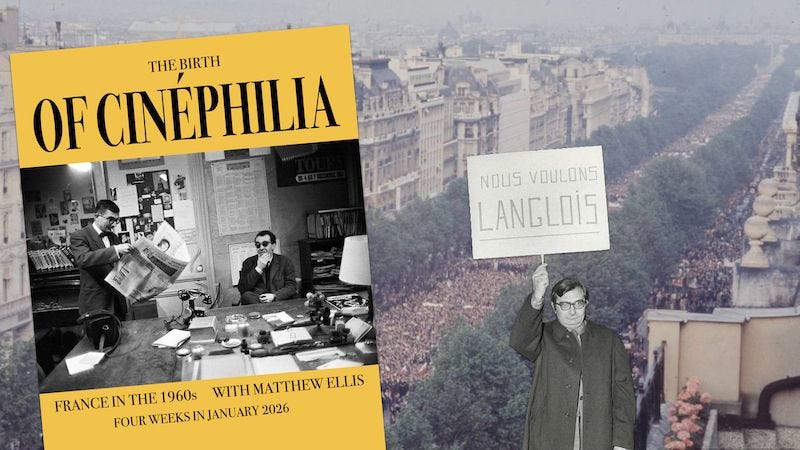
If you aren’t familiar with Cinejourneys you should fix that. It’s a new-ish online platform that offers a wide-ranging set of film courses taught by losers like me but also critics and figures across the world of cinema, from academia to TCM and the broader world of criticism and culture (Imogen Sara Smith, Tiffany Vazquez, more exciting names coming soon). I view my courses as an opportunity to not just explore interests that I don’t get a chance to dive into in my university job, but also as seminars for exploring big ideas.
While I’ve taught courses like Film Theory and Genre Theory for Cinejourneys, these two are unlike anything I’ve taught for the company before: specific arguments about the historicity of film history, and its lessons for us in our present moment of crisis and transformation. In both classes I will be offering access to scholarly resources as part of your $100 registration fee that you can peruse at your own pace; we will be discussing them in class, but no reading or screenings are required. So the answer to your “do I have time for this?” question is: if you can make the meetings, yes you do!
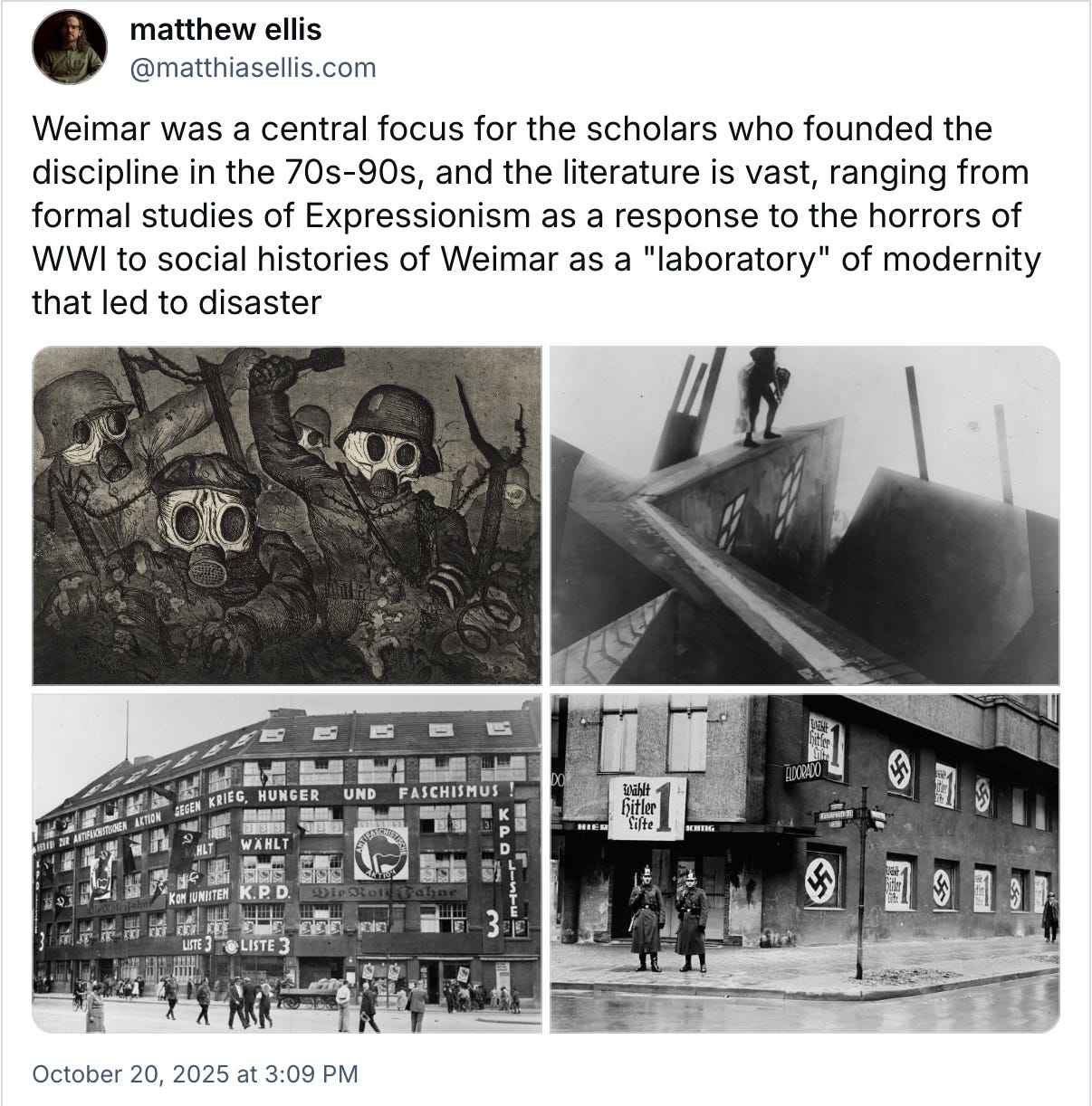
Now. If you’ve ever taken a film course at a college or university, you’ve probably encountered films like Metropolis or The Cabinet of Dr. Caligari as you learned about the cinematic techniques developed in the 1920s like German Expressionism. If you’ve taken a film theory course of any sort, you likely encountered André Bazin and the founding of the french film journal Cahiers du Cinéma, learning that young critics who wrote under his tutelage went on to influence world cinema by directing films in the French New Wave movement. Then something-something 1968. But I’m trying to correct these narratives with a set of questions I don’t think we ask enough outside of high level academic seminars, cordoned off from the general public and leaving cinephiles and people in general just looking for similarities in the past without recognizing that certain continuities are disregarded while others are oversimplified.

For instance: are we living through the same rise of fascism as Weimar Germany experienced during the 1920s and early 1930s? The answer in the left/liberal popular press seems to be: Yes. But I think that’s more of an emotional truth than a historical truth, or even an accurate understanding of our own moment. If you understand the cinema and culture of the Weimar 1920s as nothing more than a stepping stone to Nazi occupation, you’re going to read determinism in everything that may accurately describe what happens on the next page of the history book, but when transported into making sense of our present, only ends up reifying a darker future that we are all trying to avoid. What would it be like to return to Weimar in a different light, to see it as a radical rupture from an old that had to be dismantled? Or what about French criticism in the 1960s, the centrality of cinephilia to the founding of French film culture and later the world’s, all of which blew up in a chaotic mess during May 1968. Today we lionize these early critics and we so often try to emulate their methods. In my course, we will ask…why? What made postwar France the place where this certain mode of film culture emerged, and why is our moment radically different from theirs in such a way that we should perhaps not be looking to them for models but somewhere new?
Anyway, I’m very excited about these courses and would love to have you. You can find more details at the links below, but I do want to say that these courses are meant to be fun, informative, and to provide you resources that you can use at your own pace and level of investment. In other words, you can sign up and do nothing except show up for the Zoom meetings. You can look at the reading/screening list I will be offering at the beginning of the course and dive into secondary materials for further research (all of which I will be providing to you as part of your $100 registration fee). You can stay silent on the calls or engage in conversation with a great group of people, which has been one of my favorite parts about these courses. I hate that I’m using salesman speak right now—I was a terrible salesman in my job at Guitar Center back in the day—but I really do think that what I’m offering in these courses (and more like them in the future) is something you can’t find outside of places like the Brooklyn Institute, and especially not for cinema and media studies. The courses will be rigorous but they are open for everyone at every level of academic experience.
So sign up at the links below and hit me up with any questions. I hope to see you soon!